Structural Drying and Dehumidification in Durham, NC
Hot, humid summers mean the air itself is already carrying moisture, so drying a wet home in Durham is as much about dehumidification as airflow. The drying team measures first and removes equipment only when readings are normal.
(888) 578-4720Report wet walls or floors that will not dry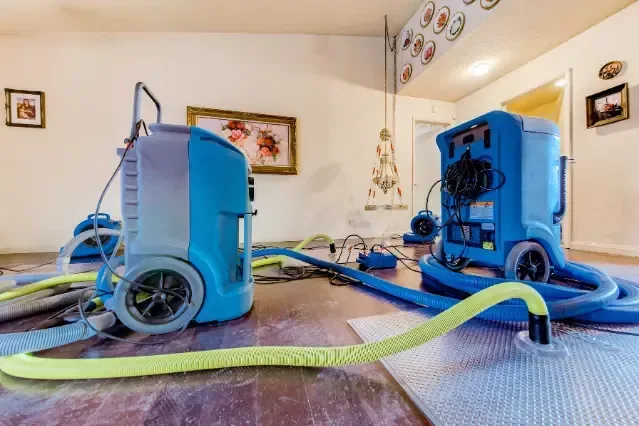
Four things every water job here gets
Dispatch around the clock
Active water is treated as urgent at any hour, and the response team rolls with truck-mounted extraction, air movers and LGR dehumidifiers.
Dried to IICRC S500
Equipment stays until framing, subfloor and drywall read within 2 to 4 points of a dry reference, not until the surface feels dry.
A claim file from day one
Moisture maps, daily psychrometric logs and timestamped photos taken before any demolition go straight into the insurance file.
Built for Triangle houses
Crawl spaces on slow-draining clay, shared townhome walls and attic water heaters all get checked, not only the room where water showed.
What to do first about structural drying and dehumidification
Map the moisture
Meters and cameras show every wet surface.
Set the equipment
Air movers and dehumidifiers are sized to the room.
Read it daily
Readings are logged and equipment is moved as needed.
Confirm and remove
Equipment leaves when each material is dry.
What does structural drying and dehumidification cost in Durham, NC?
Structural drying usually costs $1,000 to $3,500 for one room, $3,500 to $8,000 for several rooms or a crawl space, and $8,000 to $16,000+ when slabs and hardwood floors need longer drying.
- Air movers
- One dehumidifier
- Daily readings
- Several dehumidifiers
- Wall cavities dried
- Daily logs
- Mat drying systems
- Desiccant units
- Extended monitoring
How structural drying and dehumidification is handled, start to dry
Map
Meters find every wet surface.
Place
Air movers and dehumidifiers are set.
Track
Readings are logged each visit.
Finish
Equipment leaves when dry.
Water that looks gone is often still inside the structure. Framing, subfloors and the back of drywall hold moisture long after the surface feels dry, and in hot, humid weather the air keeps adding to it. Structural drying is the controlled removal of that moisture, tracked with meters rather than by touch.
Why humid air makes drying harder
Air can hold only so much water.
- Dehumidifiers pull water vapor out of the room air
- Low grain refrigerant units work well in damp, humid conditions
- Desiccant units are used where air is cool or materials are dense
- Doors and windows stay closed so the humidity stays contained
Hot, humid summers in the Piedmont keep outdoor air wet, so opening windows to dry a room usually adds moisture instead of removing it.
Walls and floors still damp after the water is gone? The drying team can measure what is left inside.
Book a moisture checkMeasuring until the structure is dry
Every material has a dry standard. Meters take readings in drywall, wood and flooring on day one, and the same points are checked each visit so the drying curve shows what is working.
- Moisture meters for drywall, wood and flooring
- Thermo hygrometers for room temperature and humidity
- Infrared cameras to find wet areas behind surfaces
- Daily logs of every reading
Equipment is adjusted or moved when readings stall, and removed only when each material reaches its standard.
Rough numbers before anyone visits
The cost calculator and the drying time estimator give typical ranges for a loss like this one. The walkthrough and the moisture map set the real scope.
What drying can and cannot save
Hardwood, subfloors and drywall that are caught early can often be dried in place. Materials that stayed wet for days, or that took on contaminated water, usually have to be removed. Drying follows water extraction, and very large losses overlap with flood water cleanup. Skipping the final readings risks mold behind the walls.
Structural drying and dehumidification across Durham and nearby communities
Drying equipment goes into homes, lofts and offices throughout the city, from Duke Park and Trinity Park to Lakewood Park, Golden Belt and the buildings around the American Tobacco campus.
The same service nearby: structural drying and dehumidification in Morrisville, Carrboro, Wake Forest.
All water damage services for this town › · every area covered ›
Related water damage services
Structural Drying and Dehumidification questions
Water still showing up?
Walls and floors still damp after the water is gone? The drying team can measure what is left inside.
(888) 578-4720 Book a moisture checkHow long does structural drying usually take?
Several days for drywall and framing, longer for hardwood, slabs and dense materials. Meter readings decide the finish, not the calendar.
Why are the dehumidifiers so loud and warm?
They run constantly and give off heat while pulling water from the air. That warmth helps materials dry.
Can a window fan do the same job?
Not in humid weather. Outdoor air in the Piedmont often carries more moisture than the wet room, so fans alone leave the structure damp.
How is hidden moisture found behind walls?
Pinless meters and infrared cameras reveal wet areas behind paint and tile. Small test holes confirm what the readings suggest.
What if a reading stops dropping?
The team checks for a new water source, adjusts airflow or changes equipment. Stalled readings usually mean moisture is still entering or trapped.
Is the electric usage noticeable?
Dehumidifiers and air movers draw real power over several days, so equipment is sized to the room.
Surface dry is not structure dry
Hidden moisture feeds warping, odors and mold, so readings decide when drying ends, not how the room feels.
(888) 578-4720Begin the moisture work