Water Extraction and Removal in Durham, NC
After the Eno River rose above 25 feet in July 2025, homes and apartments nearby were left with standing water. The extraction crew removes it from floors and subfloors before drying begins.
(888) 578-4720Report standing water in a home or unit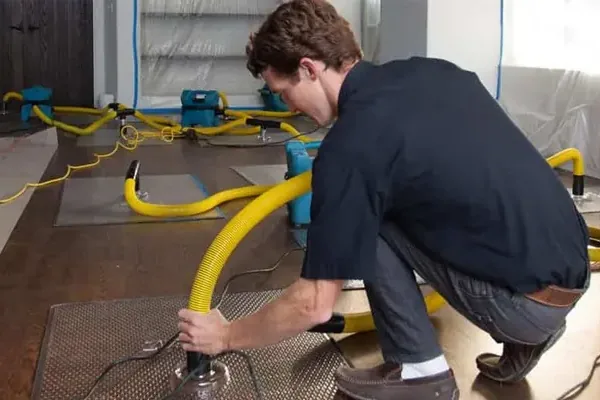
Four things every water job here gets
Dispatch around the clock
Active water is treated as urgent at any hour, and the response team rolls with truck-mounted extraction, air movers and LGR dehumidifiers.
Dried to IICRC S500
Equipment stays until framing, subfloor and drywall read within 2 to 4 points of a dry reference, not until the surface feels dry.
A claim file from day one
Moisture maps, daily psychrometric logs and timestamped photos taken before any demolition go straight into the insurance file.
Built for Triangle houses
Crawl spaces on slow-draining clay, shared townhome walls and attic water heaters all get checked, not only the room where water showed.
What to do first about water extraction and removal
Find the water
Meters and a walk-through show where it went, including under floors.
Pull it out
Pumps and wands remove standing water, then suction mats work the floor.
Remove what cannot stay
Soaked padding and contaminated materials are cut out and bagged.
Hand off to drying
Air movers and dehumidifiers take over for what extraction cannot reach.
What does water extraction and removal cost in Durham, NC?
Water extraction in a clean water case usually runs $1,200 to $4,500 for one room, $4,500 to $9,000 for several rooms or a crawl space, and $9,000 to $20,000+ once the water is contaminated or has sat for a long time.
- Pumps and wands
- Wet carpet and pad
- Moisture readings
- Several rooms extracted
- Pad and trim removed
- Dehumidifier setup
- Protective gear
- Porous materials removed
- Surfaces cleaned
How water extraction and removal is handled, start to dry
Locate
Meters find water inside floors and walls.
Extract
Pumps and wands remove the standing water.
Remove
Soaked padding and ruined materials go out.
Dry
Air movers and dehumidifiers finish the job.
Extraction is the first job after water gets in, and every later step depends on how much comes out. When the Eno River reached a record level in July 2025 and first responders rescued dozens of people from homes and apartments near it, the cleanup that followed began with the same question: how deep is the water, and where is it sitting?
Getting the water out of the structure
Water rarely stays on top of a floor.
- Carpet and pad are lifted and drained, or removed when contaminated
- Hardwood and laminate get suction mats and wands to reach the seams
- Subfloors and cabinet bases are checked with meters, not by eye
- Water trapped behind baseboards is pulled through small drilled holes
Clay soil drains slowly, so water that reaches a foundation or a yard can linger instead of soaking away, and it keeps working its way toward the house.
Water on the floor after a storm or a failed pipe? The extraction crew can start pulling it out.
Request water removal nowClean rain water versus flood water
River and storm water carries silt and bacteria, so porous materials it touched are usually removed rather than saved.
- Clean supply water: carpet and pad can often be dried in place
- Rain through a roof: ceilings and insulation are checked first
- River or ground water: porous materials come out and hard surfaces are cleaned
- Sewage: handled as its own job, with protective gear
The category of water decides what is saved, so it is identified before anything is pulled out.
Rough numbers before anyone visits
The cost calculator and the drying time estimator give typical ranges for a loss like this one. The walkthrough and the moisture map set the real scope.
Why waiting costs more
Water that sits for a day or two keeps spreading through drywall and flooring, and mold can begin to grow in damp materials. Extraction stops that spread. Once the standing water is gone, structural drying brings the moisture left inside walls and floors back to normal, and the other local water services cover the rest of the damage.
Water extraction and removal across Durham and nearby communities
The extraction crew works in the neighborhoods along Ellerbe Creek, including Walltown, Trinity Park and Ninth Street, and across the rest of the city from Hope Valley to East Durham.
The same service nearby: water extraction and removal in Morrisville, Carrboro, Wake Forest.
All water damage services for this town › · every area covered ›
Related water damage services
Water Extraction and Removal questions
Water still showing up?
Water on the floor after a storm or a failed pipe? The extraction crew can start pulling it out.
(888) 578-4720 Request water removal nowCan a finished floor be extracted without tearing it up?
Often yes. Suction mats and wands pull water from hardwood and laminate seams, and a meter confirms what remains. Floors still wet underneath may need boards lifted.
Does clay soil change how long water lingers outside a home?
It can. Durham's clay drains slowly, so water pooled against a foundation or in a yard may keep seeping toward the house longer than it would in sandy ground.
What happens to carpet after extraction?
Clean water cases often keep the carpet, with the pad replaced or dried. Flood water or sewage means both go, because bacteria settle into the fibers and cannot be fully washed out.
When does extraction end and drying begin?
Extraction ends when pumps and wands stop pulling water. Drying then handles what soaked into materials, using air movers and dehumidifiers until meters read normal.
Should the power stay on in a flooded room?
No. Water near outlets and cords is a shock risk, so the breaker for that room goes off first, and an electrician checks anything that got wet.
Standing water keeps soaking in while the decision waits
Each day of delay sends water deeper into subfloors and walls, so more has to come out.
(888) 578-4720Talk to the extraction crew