Storm and Hurricane Rain Damage in Morrisville, NC
Wind-driven rain gets past shingles, flashing, windows and doors during summer thunderstorms and tropical systems. The storm response team extracts it, opens wet ceilings and walls and dries the structure to a reading.
(888) 578-4720Report rain coming in after the storm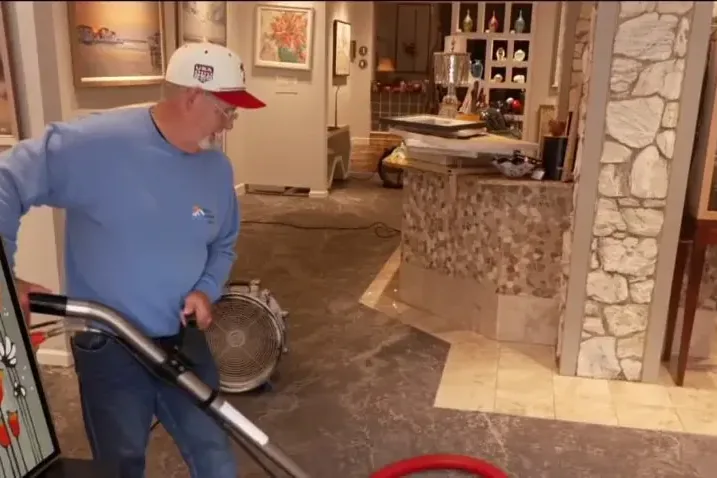
Four things every water job here gets
Dispatch around the clock
Active water is treated as urgent at any hour, and the response team rolls with truck-mounted extraction, air movers and LGR dehumidifiers.
Dried to IICRC S500
Equipment stays until framing, subfloor and drywall read within 2 to 4 points of a dry reference, not until the surface feels dry.
A claim file from day one
Moisture maps, daily psychrometric logs and timestamped photos taken before any demolition go straight into the insurance file.
Built for Triangle houses
Crawl spaces on slow-draining clay, shared townhome walls and attic water heaters all get checked, not only the room where water showed.
What to do first about storm and hurricane rain damage
Stay safe first
Wait for the storm to pass before going outside.
Catch the drips
Set out buckets and move contents from wet rooms.
Photograph the openings
Record roof, window and ceiling damage.
Tarp only if safe
Cover openings from the ground or leave it to a pro.
What does storm and hurricane rain damage cost in Morrisville, NC?
Storm rain cleanup here typically runs $1,500 to $5,000 for one wet ceiling or wall, $5,000 to $12,000 when attic insulation and several rooms got wet, and more after a long tropical rain.
- Extraction
- Ceiling drained
- Air movers
- Insulation pulled
- Wall cavities vented
- LGR dehumidifiers
- Multiple rooms
- Containment
- Extended monitoring
How storm and hurricane rain damage is handled, start to dry
Inspect
Openings and wet areas are mapped.
Extract
Standing rain water comes up.
Open
Wet ceilings and insulation come out.
Dry
Air movers and LGR units run to dry.
Storm damage here usually comes from above and from the side, not from rising water. Summer thunderstorms and the remnants of hurricanes like Fran and Florence push rain sideways past shingles, flashing, window frames and door sills. Water then runs inside walls and soaks attic insulation before a stain appears. Rising creek water is a separate problem, covered on the flood page.
How storm rain gets inside
The entry points repeat across the Triangle:
- Lifted shingles and failed flashing around chimneys and vents
- Window and door frames where caulk and seals have aged
- Gutters that overflow behind the fascia
- Fallen limbs that open the roof deck
Tarping the roof or boarding a window is the first fix. Drying the inside starts right after.
Rain came in during the storm? The storm response team dries ceilings and walls 24/7.
Book storm water dryingDrying after a tropical system
Tropical rain soaks a house for hours, so wall cavities and attic insulation often hold more water than the room shows.
- Attic insulation checked and pulled where wet
- Ceiling drywall drained and dried
- Wall bottoms vented behind baseboards
- LGR dehumidifiers to handle summer humidity
The Ready.gov hurricane steps cover what to do before and after a storm.
Rough numbers before anyone visits
The cost calculator and the drying time estimator give typical ranges for a loss like this one. The walkthrough and the moisture map set the real scope.
Rain versus flood on the claim
Rain that enters through storm damage to the roof or windows is often handled by a homeowners policy. Rising water from outside is flood and needs a flood policy. Photos of the opening, the moisture map and daily logs keep the two clear. The National Weather Service thunderstorm safety page covers staying safe while storms pass.
Storm and hurricane rain damage across Morrisville and western Wake County
Coverage spans ZIP 27560, from the Town Center and Shiloh out to Breckenridge, Kitts Creek, Crabtree Crossing and the homes and offices along Davis Drive, Aviation Parkway and McCrimmon Parkway.
Nearby coverage reaches Cary, Durham, Raleigh, Research Triangle Park, Apex, Holly Springs, Carrboro, Wake Forest, Rolesville.
Related water damage services
Storm and Hurricane Rain Damage questions
Water still showing up?
Rain came in during the storm? The storm response team dries ceilings and walls 24/7.
(888) 578-4720 Book storm water dryingHow is storm rain damage different from flood damage?
Storm damage is rain that comes in through the roof, windows or walls. Flood damage is rising water from outside, which is Category 3.
Should I wait for the adjuster before storm drying starts?
No. Document the damage with photos, then start drying. Waiting lets water spread and mold start.
Does wet attic insulation have to come out after a storm?
Usually. Wet blown or batt insulation compresses, holds water against the drywall and dries poorly.
How long does storm water take to dry?
Usually three to six days. Soaked ceilings and wall cavities after a long tropical rain take longer.
Is storm rain damage covered by insurance?
Rain entering through storm damage is often covered by a homeowners policy. Rising water needs flood coverage. Check your own policy.
Can summer humidity slow storm drying?
Yes. Humid air slows evaporation, so LGR dehumidifiers work inside a closed-up room.
Storm rain inside a Morrisville home? Get it dried out.
Rain that soaked a ceiling or wall keeps spreading until the cavities are opened and dried.
(888) 578-4720Get the storm dry-out moving