Commercial Water Damage in Durham, NC
From research buildings around Research Triangle Park to shops at The Streets at Southpoint, commercial space takes water differently. The mitigation team plans around tenants, dries the wet areas in phases and keeps the unaffected spaces working.
(888) 578-4720Report water in a shop, office or building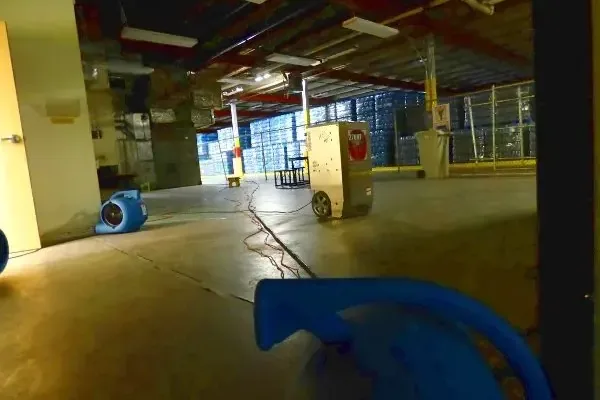
Four things every water job here gets
Dispatch around the clock
Active water is treated as urgent at any hour, and the response team rolls with truck-mounted extraction, air movers and LGR dehumidifiers.
Dried to IICRC S500
Equipment stays until framing, subfloor and drywall read within 2 to 4 points of a dry reference, not until the surface feels dry.
A claim file from day one
Moisture maps, daily psychrometric logs and timestamped photos taken before any demolition go straight into the insurance file.
Built for Triangle houses
Crawl spaces on slow-draining clay, shared townhome walls and attic water heaters all get checked, not only the room where water showed.
What to do first about commercial water damage
Secure the property
Power is shut off and the source is stopped.
Extract and contain
Standing water is removed and wet zones sealed.
Open and dry
Wet materials come out and equipment is set.
Document and release
Records are shared and equipment leaves.
What does commercial water damage cost in Durham, NC?
Commercial water damage usually costs $3,000 to $10,000 for one suite or storefront, $10,000 to $40,000 for several suites or a floor, and $40,000 to $120,000+ for a multi floor loss.
- Water extracted
- Wet ceiling cut
- Drying equipment
- Containment barriers
- Phased drying
- Moisture logs
- Floor by floor drying
- Extended monitoring
- Full documentation
How commercial water damage is handled, start to dry
Secure
Water and power are stopped.
Extract
Standing water is removed from every level.
Dry
Equipment is placed and monitored daily.
Report
Records go to the owner and the adjuster.
A commercial loss is measured in downtime as well as water. Durham's commercial base is broad: universities and a health system, research offices, converted tobacco buildings and shopping centers, each with different floors, ceilings and tenants. A plan that works for a single storefront does not work for a multi floor building.
Planning around tenants and operations
The building keeps running where possible.
- Wet areas are sealed off with containment barriers
- Equipment is placed to keep entrances and walkways clear
- Noisy work is scheduled around business hours where it can be
- Contents are moved, covered or tagged before drying begins
Property managers receive plain updates on what is wet, what is dry and what comes next, so tenants can be told the same facts.
Water in the ceiling of a shop, office or suite? The response team can plan around operations.
Secure the wet suitesDocumentation for adjusters and owners
Commercial claims run on records. Photos, moisture logs and equipment counts are kept for every affected suite, giving the building owner and the adjuster a single timeline.
- Daily moisture readings for each room
- Photos before and after demolition
- Lists of removed materials
- Equipment placement and run records
Clear records also help a business owner see which losses belong to the building and which to the tenant.
Rough numbers before anyone visits
The cost calculator and the drying time estimator give typical ranges for a loss like this one. The walkthrough and the moisture map set the real scope.
Large losses and multi floor buildings
Water in an upper floor travels through slabs, shafts and ceilings, so every level below is checked. Large buildings often need several dehumidifiers and phased drying, covered in structural drying, after water extraction removes the standing water. Sewage in a business falls under sewage backup cleanup.
Commercial water damage across Durham and nearby communities
Commercial calls cover businesses and buildings across the city, including offices in Research Triangle Park, converted buildings around Brightleaf Square and the American Tobacco campus, and shops at The Streets at Southpoint.
The same service nearby: commercial water damage in Morrisville, Carrboro, Wake Forest.
All water damage services for this town › · every area covered ›
Related water damage services
Commercial Water Damage questions
Water still showing up?
Water in the ceiling of a shop, office or suite? The response team can plan around operations.
(888) 578-4720 Secure the wet suitesCan a business stay open during water damage cleanup?
Often yes, in the dry areas. Containment barriers, planned equipment routes and phased work keep unaffected spaces running.
How are tenants and landlords kept in the loop?
Property managers get plain updates on what is wet, what is dry and what happens next, so every tenant hears the same facts.
What records does an adjuster expect?
Photos, moisture logs, a list of removed materials and equipment records. The restoration team keeps all of them for every affected suite.
Does commercial drying take longer than residential?
Often, because buildings are larger and materials such as concrete slabs dry slowly. Phased plans and several dehumidifiers keep the schedule steady.
What about stock, files and equipment?
Contents are moved, covered or tagged before drying begins. Water sensitive items can be photographed and listed for the claim.
Is sewage in a business handled differently?
Yes. It is treated as contaminated, with protective gear, removal of porous materials and disinfection, and affected areas stay closed until they pass.
Downtime costs more than the water does
Phased drying, containment and clear records limit how much of a building has to close.
(888) 578-4720Plan the commercial response