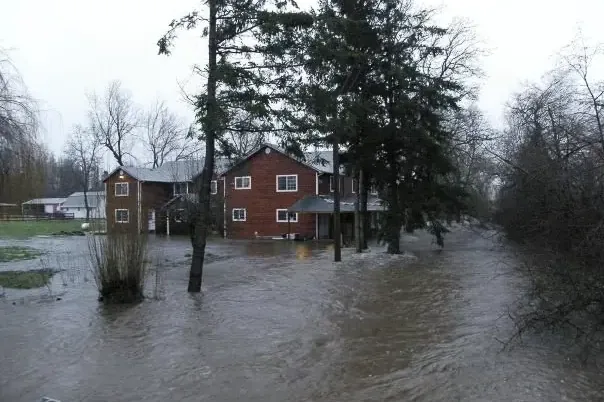
On July 7, 2025, the Eno River near Durham topped 25 feet, a record level, after rain from Chantal. First responders rescued dozens of people from homes and apartments near the river that day. A household with river water indoors faces a different job than a burst pipe, and the first day sets the pace for everything that follows.
Key takeaways
- River water is treated as Category 3, so carpet, pad and wet drywall near the floor are usually removed instead of saved.
- Safety comes first: live power, gas and floodwater still outside the door can all be hazards.
- Photos taken before anything is moved support the insurance or aid paperwork that comes later.
- Clay soil keeps yards wet after the river drops, so water can keep seeping toward the house.
- Drying in a hot, humid summer leans on dehumidifiers, with readings checked until the structure is dry.
Why river water is handled as contaminated
Floodwater from a river is not the same as water from a broken supply pipe. It carries soil, yard chemicals, runoff and sometimes sewage from overwhelmed drains.
The Eno River runs through the northern part of the city and feeds the Neuse River, while Ellerbe Creek flows through Ninth Street, downtown, Trinity Park and Walltown. Water from either one belongs in the Category 3 class once it enters a home.
That class decides what happens next. Materials that soak up contaminated water are removed, and hard surfaces are cleaned and treated.
- Carpet and pad come out and are not reused.
- Drywall and insulation that touched the water are cut out above the high-water mark.
- Hard surfaces are cleaned and treated before drying starts.
- Upholstered furniture and mattresses that sat in the water are usually discarded.
Safety before cleanup
Standing water inside a flooded home can hide live wiring, broken glass and slick mud. The rescues on July 7 are a reminder that rising water changes quickly.
North Carolina's flood.nc.gov lets residents check flood risk at a specific address, which helps a household judge whether water could return.
- Stay out until the water outside has dropped and power is off to the flooded areas.
- Do not touch outlets, cords or appliances that stood in water.
- Wear boots, gloves and a mask when entering mud and water.
- Keep children and pets away from the wet rooms.
The first day, step by step
Once it is safe to go in, the order of work matters. Moving too much before taking pictures makes the loss harder to prove.
Photograph before moving anything
Wide shots of each room and close shots of the high-water mark on the walls show how deep the water stood. Date-stamped pictures help the insurer and any aid program.
- Photograph each room from the doorway before stepping in.
- Shoot the high-water mark on walls with a tape measure beside it.
- Capture serial numbers on appliances that were in the water.
Get the water and mud out
Pumps and wet vacuums move the standing water, and shovels and squeegees handle the silt. Water extraction crews work from the lowest point so water does not drain back across the floor.
- Pump first, then vacuum the remaining film of water.
- Shovel silt into bags before it dries into a crust.
- Hose off hard surfaces only after the loose mud is gone.
Open the house
Doors, windows and cabinet doors are opened when outdoor air helps, and wet contents are moved to a dry spot or outside.
What can be saved and what cannot
Not everything wet is lost. Hard, sealed materials often clean up well, while soft, porous ones rarely do.
Wood floors fall in between. They can cup and buckle, and readings are needed before anyone decides to keep or replace them.
- Often saved: solid wood furniture, tile, concrete and metal fixtures after cleaning.
- Often lost: carpet pad, mattresses, particleboard cabinets, insulation and drywall at floor level.
- Case by case: hardwood floors and subfloor, based on moisture readings.
Apartments and shared buildings near the river
Rescues on July 7 reached apartments as well as houses, and the city has 146,201 housing units in the 2024 estimate, many of them apartments and lofts. A tenant whose ground floor flooded follows the same safety and photo steps, plus a few that involve the building.
Walls, floors and utilities are shared in a multi-unit building, so water in one unit can reach the next. The manager or owner needs to hear about it quickly and in writing, so repairs to common areas and to individual units are planned together.
A displaced household should keep every receipt. Hotel bills, meals and replacement basics may matter to a renter's policy or to aid programs.
The Durham water damage restoration pages cover the other water problems that reach city homes.
- Tell the manager or owner in writing as soon as it is safe.
- Ask which parts of the loss fall under the building's policy, the owner or a renter's policy.
- Keep receipts for hotels, meals and replacement basics.
- Photograph hallways, stairwells and lobbies if they flooded too.
Drying when clay holds the ground wet
The soil here is predominantly clay, so a yard that took on river water stays soggy and can keep pushing moisture toward foundations after the river drops.
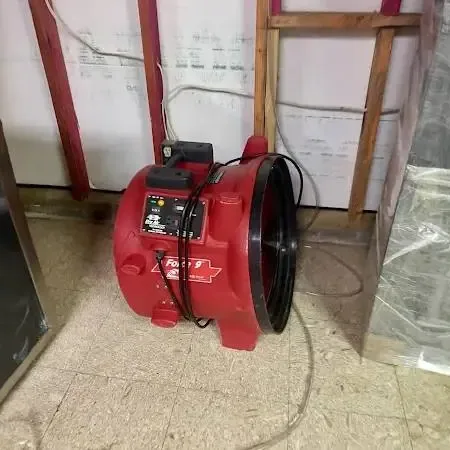
Summers are hot and humid, which slows drying. Flood water cleanup in July therefore leans on dehumidifiers and moisture meters more than on open windows.
Mold is the reason crews work toward dry framing quickly. Damp wood and drywall left closed up can start growing it within the first couple of days.
Records, flood maps and what comes next
A high-water sign on the Eno River still marks the level reached by Hurricane Fran in 1996, and the July 2025 crest went past 25 feet. Flood risk along the river is not new.
A 2022 FEMA notice listed changed flood hazard determinations for the city, so it is worth checking the map for an address again. Standard homeowner policies and flood policies differ, so the policy wording decides what is covered.
The same Category 3 steps apply to flood water cleanup elsewhere in the Triangle.
Questions
Is river flood water really different from a pipe leak?
Yes. River water carries soil, runoff and sometimes sewage, so it is treated as Category 3. A clean supply pipe leak starts out cleaner, though it can turn contaminated if it sits.
Should the carpet be pulled or can it be dried?
After river flooding the carpet and pad are normally removed. Contaminated water soaks into fibers and padding, and cleaning rarely makes them safe to keep.
Can a home flood again after the river drops?
Seepage can continue. Clay soil holds water and can push it toward a foundation or under a floor for days after the crest.
Where can a household check flood risk?
North Carolina's flood.nc.gov shows flood risk by address, and FEMA maps are the base for flood insurance decisions. Both are worth a look after a loss like this.
Who takes reports of drainage problems on private property?
Durham One Call is the City contact for drainage problems on private property, and the City of Durham Department of Water Management runs water and sewer service.