Flood Water Cleanup in Wake Forest, NC
Heavy rain can push creeks and runoff into yards, garages and ground floors. The Town keeps a list of flood-prone street locations along its creeks, and any water that comes in from outside is treated as contaminated until the cleanup is done.
(888) 578-4720Ask for flood recovery help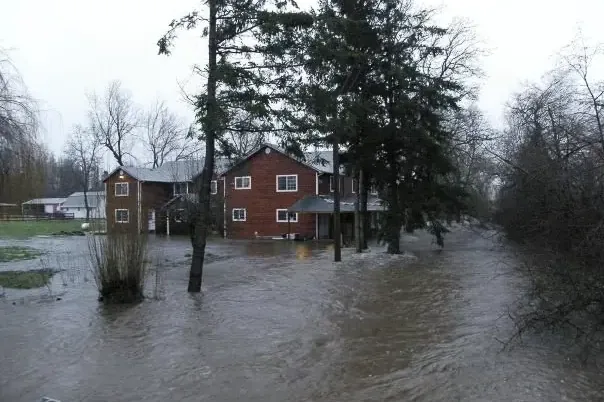
Four things every water job here gets
Dispatch around the clock
Active water is treated as urgent at any hour, and the response team rolls with truck-mounted extraction, air movers and LGR dehumidifiers.
Dried to IICRC S500
Equipment stays until framing, subfloor and drywall read within 2 to 4 points of a dry reference, not until the surface feels dry.
A claim file from day one
Moisture maps, daily psychrometric logs and timestamped photos taken before any demolition go straight into the insurance file.
Built for Triangle houses
Crawl spaces on slow-draining clay, shared townhome walls and attic water heaters all get checked, not only the room where water showed.
What to do first about flood water cleanup
Make the space safe
Power is cut and the crew enters with boots, gloves and masks.
Pump the water out
Pumps clear the depth, and silt is shoveled or vacuumed.
Remove porous materials
Carpet, padding, insulation and wet drywall are bagged.
Sanitize and dry
Surfaces are cleaned, then equipment runs until dry.
What does flood water cleanup cost in Wake Forest, NC?
One room or crawl space with floodwater usually costs $3,000 to $9,000. Several rooms run $9,000 to $25,000, and a whole floor can reach $50,000 or more because every porous material may be removed.
- Water pumped out
- Porous materials removed
- Surfaces sanitized
- Multiple rooms stripped
- Contents sorted
- Extended drying
- Floor wide removal
- Sanitizing throughout
- Full documentation
How flood water cleanup is handled, start to dry
Secure
Cut power and check the footing.
Pump
Remove silty water from every level.
Strip
Bag porous materials the water touched.
Sanitize
Clean surfaces, then dry the structure.
Water that comes in from outside carries silt, yard waste and bacteria, which is why flood cleanup differs from a supply pipe leak. The crew wears protective gear, pumps the water out and decides item by item what can be cleaned and what has to go.
Where the Town expects high water
The Town's list of streets prone to flooding in significant rainfall includes crossings at creeks around town:
- Durham Road at Richland Creek
- Harris Road and West Oak Avenue at Richland Creek
- Ligon Mill Road at Smith Creek and Toms Creek
- Oak Grove Church Road and Wait Avenue at Dunn Creek
The list covers street crossings only, so a property away from these roads can still take on water in a heavy storm.
Water that came in from outside should not be handled with a mop. Describe the damage and the crew will plan the removal.
Describe the floodingSorting what stays and what goes
Flood water soaks into anything porous, so carpet, padding, insulation and drywall touched by it are removed. Hard surfaces and solid wood furniture can often be cleaned and dried.
- Hard surfaces are washed and sanitized
- Upholstery that sat in water is discarded
- Electronics stay off until they are checked
- Photos of every discarded item are kept
Basements and ground floors dry last, so the crew plans extra equipment there. Structural drying covers that stage.
Rough numbers before anyone visits
The cost calculator and the drying time estimator give typical ranges for a loss like this one. The walkthrough and the moisture map set the real scope.
Before rebuilding starts
Once the readings are dry and surfaces are sanitized, rebuilding can begin. A flooded crawl space needs its own pump-out and drying, and the broader scope sits in the main flood service. The Town's creek and street list is not a prediction for any single property.
Flood water cleanup across Wake Forest and nearby communities
Flood cleanup covers 27587 and the streets near Richland Creek, Smith Creek, Toms Creek, Sanford Creek and Horse Creek, wherever runoff reaches a home or business.
The same service nearby: flood water cleanup in Morrisville, Rolesville, Durham.
All water damage services for this town › · every area covered ›
Related water damage services
Flood Water Cleanup questions
Water still showing up?
Water that came in from outside should not be handled with a mop. Describe the damage and the crew will plan the removal.
(888) 578-4720 Describe the floodingIs flood water more dangerous than a pipe leak?
Yes. Water from outside can carry bacteria, silt and chemicals from yards and roads, so protective gear is worn and porous materials are removed.
Which streets does the Town list as flood-prone?
The Town's list includes crossings at Richland Creek, Smith Creek, Toms Creek, Sanford Creek, Horse Creek, Dunn Creek and Mud Branch, among other named street locations.
Can furniture that sat in flood water be saved?
Solid wood and hard surfaces can often be cleaned and dried. Upholstered pieces and particleboard usually cannot be made safe again.
What about electronics and appliances?
They stay unplugged until checked. Anything that sat in water can fail later, so it should be inspected before use.
Does a crawl space need its own cleanup?
Yes. Water pools on the barrier and soaks insulation and subfloor, so it is pumped, stripped and dried separately from the rooms above.
Is a home near one of these creeks always at risk?
No. The list names street crossings, not individual properties, and heavy rain can put water in places the list does not mention.
Get the floodwater out and the structure dry
The restoration team brings pumps, protective gear and drying equipment, and the call can come at any hour.
(888) 578-4720Call about flooding