Structural Drying and Dehumidification in Holly Springs, NC
Drying is the part of restoration that follows the water. Air movers and dehumidifiers pull moisture out of framing, subfloor and drywall, and readings decide when the equipment can leave.
(888) 578-4720Start the drying plan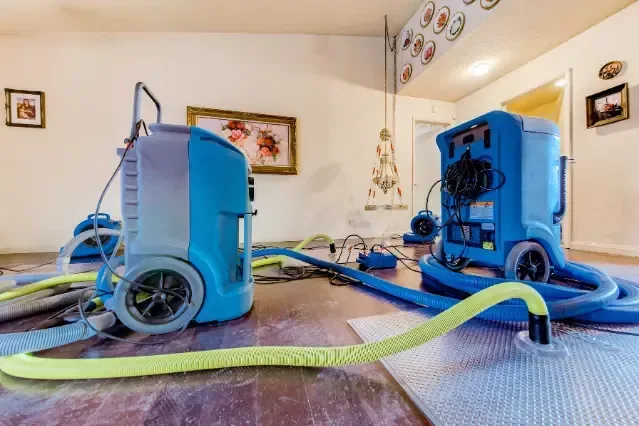
Four things every water job here gets
Dispatch around the clock
Active water is treated as urgent at any hour, and the response team rolls with truck-mounted extraction, air movers and LGR dehumidifiers.
Dried to IICRC S500
Equipment stays until framing, subfloor and drywall read within 2 to 4 points of a dry reference, not until the surface feels dry.
A claim file from day one
Moisture maps, daily psychrometric logs and timestamped photos taken before any demolition go straight into the insurance file.
Built for Triangle houses
Crawl spaces on slow-draining clay, shared townhome walls and attic water heaters all get checked, not only the room where water showed.
What to do first about structural drying and dehumidification
Map the wet area
Meters and cameras show where water traveled.
Place the equipment
Air movers and dehumidifiers go where readings are highest.
Monitor each visit
Readings are logged and gear is moved as needed.
Confirm and remove
Equipment leaves once every material matches dry points.
What does structural drying and dehumidification cost in Holly Springs, NC?
Structural drying usually runs from $1,000 to $16,000 or more. One room costs the least, several rooms or a crawl space cost more, and slabs and hardwood take the longest and cost the most.
- Mapping
- Air movers
- Dehumidifier
- Wall cavity drying
- Multiple dehumidifiers
- Daily readings
- Floor drying mats
- Extended monitoring
- Staged equipment
How structural drying and dehumidification is handled, start to dry
Map
Meters trace the wet zones.
Place
Gear goes where readings run high.
Track
Readings are logged at each visit.
Finish
Equipment leaves at dry targets.
Structural drying begins after the standing water is gone. Wood, drywall and concrete hold moisture long after the surface looks dry, so the crew sets equipment, measures often and moves gear as the wet zones shrink. The job ends when the numbers say it ends, not when the room feels dry.
Equipment doing the work
Each machine has a job.
- Air movers push dry air across wet surfaces
- Dehumidifiers pull moisture out of the air
- Mats and ports dry hardwood and wall cavities
- Thermal cameras show cool, wet zones
Placement matters as much as the machines, which is why the gear is repositioned as readings change.
Water gone but the walls feel damp? Describe the loss and the crew will explain the drying plan.
Plan the dry outReading the numbers
A dry reference reading is taken from unaffected material of the same kind, and every wet material is measured against it at each visit. Drywall, framing and flooring each have a target.
- Readings are logged room by room
- Humidity in the air is tracked as well
- Cold or damp pockets get extra gear
- Equipment leaves only at the target
Plain logs keep everyone honest.
Rough numbers before anyone visits
The cost calculator and the drying time estimator give typical ranges for a loss like this one. The walkthrough and the moisture map set the real scope.
Why finishing early costs more
Closing a wall or laying new flooring over damp material traps moisture, and that is when odor, warping and mold begin. After water extraction or a burst pipe cleanup, drying is the step that protects the repair.
Structural drying and dehumidification across Holly Springs and nearby communities
Drying equipment runs in homes and businesses across ZIP 27540, from Twelve Oaks, Oak Hall and Union Ridge to the Village District and the neighborhoods around Bass Lake Park.
The same service nearby: structural drying and dehumidification in Morrisville, Durham, Carrboro.
All water damage services for this town › · every area covered ›
Related water damage services
Structural Drying and Dehumidification questions
Water still showing up?
Water gone but the walls feel damp? Describe the loss and the crew will explain the drying plan.
(888) 578-4720 Plan the dry outHow long does structural drying take?
It depends on the materials and how wet they got. Dense items such as hardwood and concrete take longer than carpet, so readings set the schedule.
Why does the equipment run all day?
Drying needs steady airflow and dehumidification, and stopping early lets moisture settle back into the materials.
Is a dehumidifier different from a fan?
Yes. Fans move air across surfaces, while a dehumidifier removes moisture from the air so the water actually leaves the building.
How can anyone tell the structure is dry?
A moisture meter reading on each material is compared with a dry reference reading taken from unaffected material.
Will the equipment raise the electric bill?
Drying gear draws power while it runs, so the bill can rise for a short time. The crew can explain the load before it is set.
What happens if something stays damp?
Hidden moisture can cause odor, warping and mold growth, so the crew keeps monitoring until every reading clears.
Damp materials do not dry on their own
Tell the crew what got wet and when the water stopped. A monitored schedule follows.
(888) 578-4720Reach the drying crew