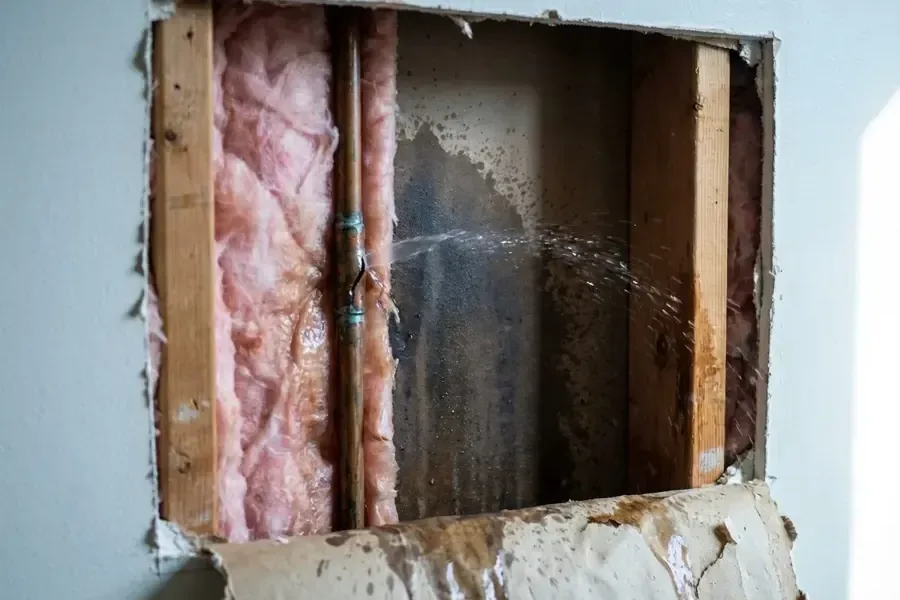
A burst pipe sends water through walls and floors fast, and the next question is who has to fix it. In Wake Forest the answer depends on where the break sits compared with the water meter. The repair and the water damage cleanup are separate jobs, and both go better once the water is shut off.
Key takeaways
- A break between the meter and the house, or anywhere inside the house, is the customer's to repair.
- Raleigh Water is responsible for the main and for the pipes running from the main to the meter.
- Closing the home's shutoff valve stops new water, and the Town tells residents to learn where the valves are before a pipe bursts.
- A plumber repairs the pipe, while a restoration crew removes the water and dries walls, ceilings and floors.
- In-ground irrigation tied to the house supply is another place a break can start.
Where the break is decides who repairs it
The City of Raleigh owns and operates the water and wastewater system serving the urban service area of the Town. Raleigh Water, formerly the City of Raleigh Public Utilities Department, is the contact for water and sewer service questions.
Raleigh Water is responsible for the main under the street and for the pipes between the main and the meter. The main itself rarely breaks, because water runs continuously through it.
When a pipe breaks between the water meter and the home, or inside the home, the customer is responsible for repairs.
- Break at the main, or between the main and the meter: report it to Raleigh Water.
- Break after the meter, on the way to the house: the homeowner arranges the repair.
- Break inside walls, ceilings or floors, or at a fixture: the homeowner arranges the repair.
- Water damage inside the house: handled as a separate job from the pipe repair.
How the water system came to be Raleigh's
In July 2005 the Town of Wake Forest and the City of Raleigh merged their water and sewer systems. After the merger Raleigh took sole responsibility for operating, maintaining, improving and expanding the system that serves the Town.
The Town kept authority over when and where new water and sewer service is extended within its planning and zoning jurisdiction. For a homeowner with a broken pipe the practical effect is simple: Raleigh Water is the utility contact, and the repair beyond the meter is private.
Stopping the water first
The Town tells residents to learn how to shut off water valves in case a pipe bursts. That knowledge is worth having before a pipe splits, not after.
Most homes have a shutoff where the supply enters, plus smaller valves under sinks and behind toilets. If none of them stops the flow, the problem may sit on the meter side, which is a report to Raleigh Water.
A yearly test keeps a valve from seizing when it is needed. Turning the main shutoff closed and open again takes a minute and shows whether it still moves.
- Close the main shutoff for the house, usually where the supply enters.
- Open a faucet at the lowest point to bleed off the remaining pressure.
- Turn off power to wet areas at the breaker if the panel is dry and safe to reach.
- Move rugs, furniture and electronics out of the path of the water.
- Photograph the break and every wet area before cleanup starts.
- Label the main shutoff so anyone in the household can find it.
- Tell every adult and older child where the shutoff sits.
Where burst pipe water goes
Pressurized supply pipes push a lot of water in a short time. The water follows gravity and the paths the pipes take through the structure.
Inside walls
Water runs down inside wall cavities, soaking insulation and the bottom of the drywall. The damage often shows far below the split, so a dry spot near the break does not mean the wall is dry.
Ceilings under upstairs pipes
A break above a ceiling shows first as a stain, a bulge or a sag. Opening the ceiling relieves trapped water and lets the cavity dry.
- A bulging ceiling can hold a pocket of water.
- Light fixtures under a wet ceiling should stay off until they have been checked.
- Wet insulation above the drywall is removed.
Floors and cabinets
Water that reaches the floor spreads under cabinets and flooring and then into the subfloor. Kitchen and vanity cabinets hold water at their base, where it is hard to see.
Extraction and drying while the plumber works
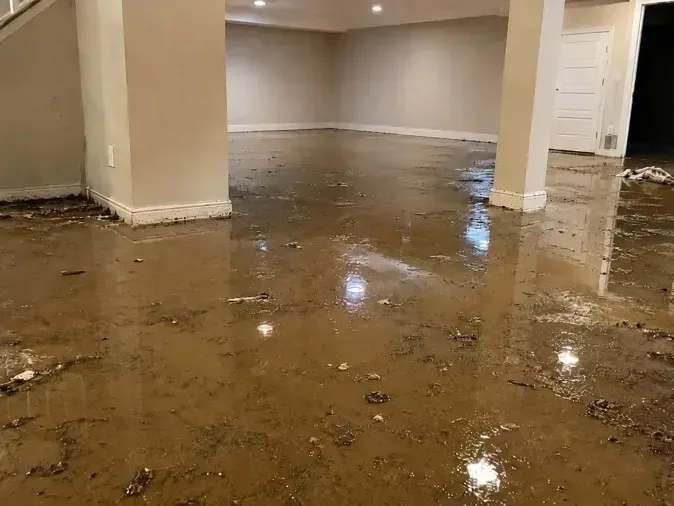
A restoration crew does not need to wait for the plumber once the water is off. Water extraction can start while the repair is being arranged, which keeps the water from soaking in further.
Summer daytime highs in the upper 80s to low 90s F come with high humidity, and that slows drying. Dehumidifiers do much of the work, and moisture readings show when walls and floors are dry.
Ceilings under a break often need to be opened so trapped water can drain and the cavity can dry. Hardwood and laminate near the break are checked with a meter, since boards can cup before the surface looks wet.
- Standing water is pumped or vacuumed first.
- Wet carpet pad, baseboards and low drywall are removed where readings call for it.
- Wall and ceiling cavities are opened so they can dry.
- Equipment stays until the framing reads dry, then the rebuild can start.
Irrigation and outdoor pipes
In 2012 the Board of Commissioners allowed new permits for in-ground irrigation systems, overturning a 2008 ban on connecting them to Raleigh's public potable water system. Questions about those permits go to the Town's Inspections Department.
An irrigation system adds pipe, valves and fittings to the house supply, and any of them can split. A break on the customer side is the owner's repair like any other, and it can flood a yard or a foundation wall.
Records and next steps
Photos, the plumber's invoice and the drying readings support an insurance claim. The cause of the break and the date it was found are the first facts an insurer asks about.
The date of the break, the location of the failed fitting and the steps taken to stop the water belong in a short written note. A plumber's invoice that names the failed part is useful when the insurer asks what happened.
For a local picture of the work, see burst pipe water damage here, and the same steps apply to burst pipe water damage across the area. The Wake Forest water damage pages list the other services that follow a pipe loss.
Questions
Who pays to repair a pipe that bursts inside the house?
The customer. When a pipe breaks between the water meter and the home, or inside the home, the repair is the customer's responsibility.
What does Raleigh Water cover?
Raleigh Water is responsible for the water main under the street and for the pipes between the main and the meter.
Should the restoration crew wait for the plumber?
No. Once the water is shut off, standing water can be extracted and drying can start while the plumber repairs the pipe.
Can an irrigation system cause a water loss?
Yes. Irrigation pipe, valves and fittings can fail like any other plumbing, and a break on the customer side is the owner's to repair.
Where do irrigation permit questions go?
To the Town's Inspections Department, following the Board of Commissioners' 2012 decision on in-ground irrigation permits.