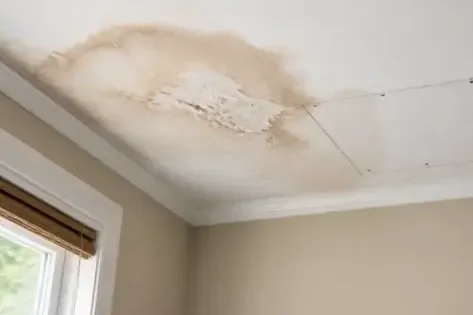
Many former tobacco buildings in Durham are now loft apartments, and the city has 146,201 housing units in the 2024 estimate, many of them apartments and lofts. In a building like that, a leak in one unit often ends up as a drip, a stain or a sagging ceiling in the unit below. The steps for the tenant or owner underneath are the same whether the water comes from a bath, a washer or a pipe.
Key takeaways
- A leak in one unit can reach the units below through ceilings, walls and shared floors.
- Light fixtures and outlets under a wet ceiling can be a shock hazard, so power to that area should go off.
- Written notice to the manager, owner or association starts the repair on the source.
- Dated photos and receipts for any costs are the core of the paperwork.
- The ceiling is opened and the joist bay dried, since drywall hides wet insulation and framing.
Why a leak in one unit reaches the next
Floors and ceilings in a multi-unit building are layered with joists, subfloor, insulation and drywall. Water that gets through the floor of one unit travels along those layers before it shows up in the next.
Pipes and drains for several units often run through the same shafts and walls. A leak above may not start with the neighbor at all; it can begin in a shared pipe.
Loft units can have tall ceilings, exposed ducts and hard floors, and each of those changes how a leak is handled. A tall ceiling gives a drip a long fall, so water can land well away from the stain.
- Exposed ducts are checked for water inside and for wet insulation wrap.
- Wood floors are checked for cupping and for moisture under the boards.
- Rugs, books and electronics are lifted off the floor and dried separately.
Safety with a wet ceiling
Water in a ceiling can sit above a light fixture, a smoke detector or an outlet, and drywall holding water can give way without notice.
A bulge means water is pooled behind the paint. If it can be reached safely, a small hole at the lowest point lets the water drain into a bucket, with the power off and the room cleared first.
- Turn off the breaker for lights and outlets in the wet area.
- Keep out from under a sagging or bulging ceiling.
- Do not use a ceiling fan or fixture that has water in it.
- Move furniture and electronics away from the wet area.
Who to tell and what to write down
The unit above is the likely source, but the cause is not always obvious. The manager or owner needs to hear about the leak promptly and in writing, since common pipes are usually the building's responsibility.
The lease or the association rules usually name a maintenance contact. Using that channel, and keeping a copy of every message, puts the date of the report on record.
- Email or text the manager with the date, the time and a short description.
- Attach photos of the stain, the drip and any damaged belongings.
- Ask whether the neighbor above has been contacted.
- Keep a log of every message and every visit.
Common sources above the ceiling
Most leaks that reach a ceiling start in the same short list of places. Knowing them helps the tenant above and the tenant below talk about the problem calmly.
A burst or loose hose is often to blame, and appliance leak water damage can spread to the unit below before the owner above notices.
- A washing machine hose or drain.
- A dishwasher or ice maker supply.
- A toilet, tub or shower overflow.
- A water heater in a closet.
- A cracked supply or drain pipe in a shared wall.
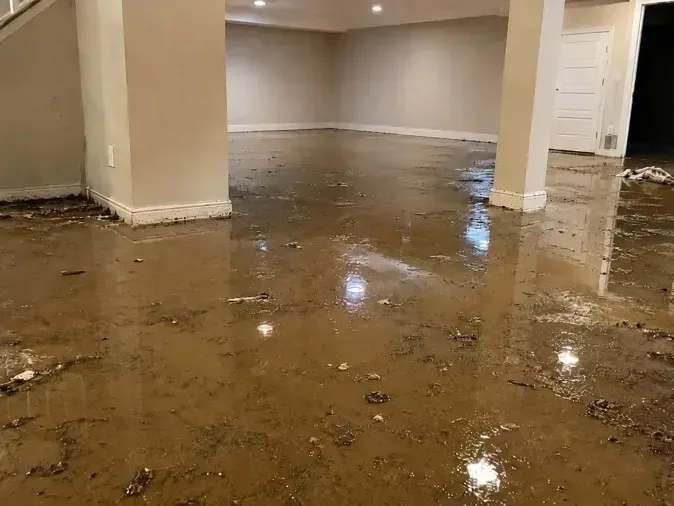
Opening and drying the ceiling
Stained drywall is only the surface. Behind it, insulation and joists can be soaked.
Ceiling leak water damage work cuts an opening in the drywall, removes wet insulation and dries the joist bay with dehumidifiers and air movers. Mold is the reason to open the ceiling early, since a closed, wet cavity can start growing it within a day or two.
- The wet area is mapped with a moisture meter before any cutting.
- Drywall is cut out beyond the visible stain.
- Wet insulation is bagged and removed.
- The cavity is dried until readings match dry framing.
The order of work
The order matters in a lived-in unit. Each stage sets up the next, and the household can plan around it.
- Mapping: moisture meters and a thermal camera trace how far the water spread.
- Extraction: standing water is removed from floors and any pooled spots.
- Opening: ceiling drywall and wet insulation are cut out and bagged.
- Drying: equipment runs while readings are logged.
- Clearance: readings show dry materials before the ceiling is closed and finished.
When more than one unit is wet
Water follows joists and walls sideways as well as down. Several units can share the same wet cavity, so drying is planned for the whole path, not one room.
A displaced household should keep receipts for hotels and meals. Renters and owners may have different policies, and the building may carry its own insurance, so questions go to the insurer and the manager.
Prevention is cheap next to a second leak. Most ceiling leaks start with a part that wears out: a hose, a seal, a drain fitting or a tank.
A tenant above who knows where the unit's shutoff valve is can stop a flood quickly, and a tenant below can ask the manager where the building's shutoff sits.
The same steps apply to a ceiling leak cleanup in other parts of the area, and the water damage pages for the city cover the rest of the services.
- Replace washer hoses on a schedule and check them for bulges.
- Put a drain pan under a water heater that sits in a closet.
- Look under sinks and behind toilets for slow drips.
- Know where the unit and the building shutoff valves are.
Questions
Who is responsible for a leak that starts in the unit above?
It depends on the lease, the building rules and where the leak began. A manager or owner can sort that out, and a written record of the damage makes the conversation easier.
Is it safe to stay in a unit with a wet ceiling?
That depends on the damage. A bulging or sagging ceiling and wet light fixtures are reasons to leave the room and shut off the power.
Can the ceiling be dried without opening it?
Sometimes for a small, fresh stain, but a soaked ceiling usually has to be opened so the insulation and joists can be checked and dried.
What if the leak stops on its own?
A stopped leak still leaves wet drywall and framing. Moisture readings show whether the cavity is dry.
Who pays for a hotel while the unit is dried?
That depends on the lease and the policy. Keeping receipts and asking the manager and the insurer early is the safest route.
Can the tenant above be asked to stop using a washer or tub?
Yes, and it is a sensible request until the source is found. The manager can ask the unit above to stop using the suspected fixture while a plumber checks it.