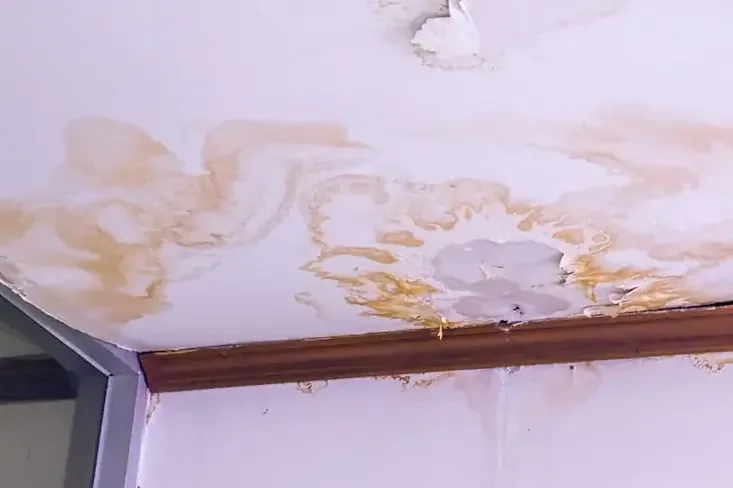
A storm can bend a shingle in seconds and leave no sign until a brown ring spreads across a ceiling weeks later. Rolesville has a record of hail, thunderstorm wind and a tornado, so roof leaks are a realistic worry for homes here. The ceiling stain is only the visible end of a path that starts on the roof.
Key takeaways
- Records going back to 1993 show 5 hail events in town, from 0.88 inch to 1.75 inches, with the largest on May 18, 2006.
- Wake County's hazard plan lists 9 thunderstorm wind reports between 1997 and 2011, each at 50 knots.
- A ceiling stain usually sits away from the real entry point, because water travels along rafters and insulation first.
- Wet attic insulation and drywall are removed or dried, while the roof itself is repaired by a roofer.
- Photos, storm dates and moisture readings support an insurance claim.
What storms have left on the record
The National Climatic Data Center recorded one tornado in the town in records going back to 1956: an F0 on March 6, 2011, with 1 injury. Wake County's hazard plan also counts 5 hail events in records going back to 1993, ranging from 0.88 inch to 1.75 inches.
The largest hail fell on May 18, 2006. The plan lists 9 thunderstorm wind reports between 1997 and 2011, each at 50 knots.
- Hail: 5 events on record beginning in 1993, up to 1.75 inches.
- Thunderstorm wind: 9 reports at 50 knots, 1997 to 2011.
- Tornado: one F0, on March 6, 2011.
- Weather pattern: summer highs generally in the 90s, with rain falling year round and most often in summer.
How hail and wind open a roof
Hail bruises shingles and knocks off the protective granules, and a wind gust can lift a shingle's edge or bend flashing around a chimney, vent or skylight.
None of that has to leak on the day it happens. Water finds the weak spot during the next hard rain, then runs along the roof deck before it drips.
Hail damage is not always visible from the ground. A roofer's inspection looks at shingle surfaces, flashing and vents up close, which is why a check after a hail report catches problems before the next rain does.
- Creased or missing shingles after a wind event.
- Granules in the gutters or at the base of downspouts after hail.
- Bent or lifted flashing at valleys, chimneys and vent pipes.
- Cracked rubber boots around plumbing vent stacks.
Reading a ceiling stain
A stain on the ceiling is a clue, not an address. Water often enters several feet from where it shows, because it follows rafters and insulation downhill first.
Roof leak or plumbing?
A roof leak tends to show after rain and slows when the weather dries. A plumbing leak keeps going in dry weather.
- Stain grows only after rain: likely the roof.
- Stain grows in dry weather: likely a pipe above the ceiling.
- Stain sits under a bathroom or laundry room: check the plumbing first.
Signs the ceiling is holding water
A sagging, bulging or bubbling ceiling may hold a pocket of water that needs to drain before the drywall gives way.
- Bubbling or peeling paint.
- Sagging drywall or a visible bulge.
- Drips from a light fixture or a vent.
Where leaks hide in the attic
A look into the attic after a rain often explains the stain below. A flashlight is enough to spot dark streaks on the roof deck, damp insulation or a nail tip with a drop of water on it.
Rolesville counted 3,086 housing units at the 2020 Census, so a great many roofs sit under the same storms. Any one of them can hide a slow leak for months.
- Dark streaks or rings on the underside of the roof deck.
- Insulation that is matted, discolored or cold and damp to the touch.
- Daylight around a vent pipe or a chimney.
- Nail tips beaded with moisture.
Temporary steps while waiting for the roofer
The first goals are safety and limiting how much water gets in. A bucket under a drip, furniture moved aside and photographs are the starting points.
If a ceiling bulges with water, a small hole at the lowest point lets it drain into a bucket instead of letting the drywall collapse. That should only be done from a safe spot, with the room cleared and power off to nearby fixtures.
Roof leak water damage work continues where the roofer's temporary cover leaves off.
- Switch off power to ceiling lights near the leak.
- Move furniture and electronics out of the room.
- Catch drips with a bucket and lay plastic on the floor.
- Ask a roofer for a temporary cover, since climbing on a wet roof is dangerous.
- Photograph the stain, the attic and any roof damage.
What wet insulation and drywall need
In the attic, soaked insulation holds water against the ceiling below and rarely dries in place. It is usually removed so the ceiling can dry from above.
Ceiling leak water damage work cuts out stained or bulging drywall and dries the joist bay with dehumidifiers and air movers. Mold is one reason to move quickly, since wet drywall and wood left closed in can grow it within a few days.
Painting over a stain before the cavity is dry only hides the problem. Stain-blocking primer does not remove moisture, and the paint can peel again at the next rain.
- Wet insulation is bagged and removed from the attic.
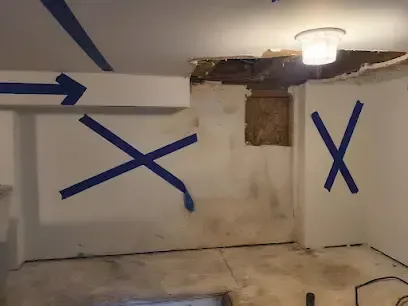
- Stained or bulging drywall is cut out in squares so the cavity is exposed.
- Moisture readings on rafters and joists decide when drying can stop.
- New insulation and drywall go in only after the framing reads dry.
Insurance paperwork after a storm
A storm date on record helps connect a leak to the weather. Policies differ on hail, wind, deductibles and roof age, so the policy wording decides what is covered.
Photos of the roof, the attic and the ceiling, along with the roofer's findings and the drying readings, give the insurer a complete picture. The same steps apply to a roof leak in other parts of the area, and the Rolesville water damage pages cover the rest of the services.
Questions
How long can a hail-damaged roof go before it leaks?
There is no fixed time. Damage can sit unnoticed until a heavy rain finds the weak spot, which is why a roof check after a hail event is worth the effort.
Why is the ceiling stain not under the hole in the roof?
Water runs along rafters, decking and insulation before it drips, so the stain can sit well away from the point where it came in.
Should a bulging ceiling be popped?
Only when it can be done safely. A small hole at the lowest point lets trapped water drain into a bucket, which can spare the drywall from collapsing.
Who comes first, the roofer or the restoration crew?
Both matter. The roofer stops new water from coming in, and the restoration crew removes the water already inside and dries the structure.
How big was the largest hail on record in town?
The largest recorded hail, 1.75 inches, fell on May 18, 2006.
Does the attic need to be checked after a storm?
It is a good idea. A flashlight look at the roof deck and the insulation after a hard rain can show a leak before a ceiling stain appears.