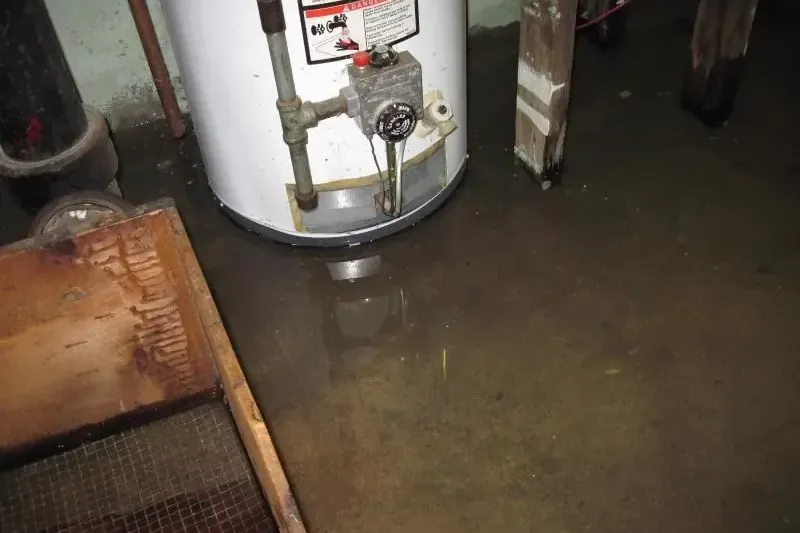
A tank water heater holds enough water to flood a closet or a garage floor, and it can fail without much warning. In Morrisville the tank usually sits in a garage, a closet or an attic, and each spot sends water somewhere different. Knowing the path helps a homeowner decide what to shut off and what to dry.
Key takeaways
- Tank location sets the damage path: across a garage slab, into closet wall framing or through an attic floor into the ceiling below.
- Shut the cold water supply to the tank first, then cut power at the breaker or turn the gas control off.
- A leaking tank is replaced, not repaired, and a plumber handles the swap.
- Extraction and drying are separate from the replacement and can begin once the water is off.
- An attic tank is the hardest leak to catch, because water runs through insulation into the ceiling below before anyone sees it.
Where the tank sits changes the damage
Local homes place water heaters in garages, closets and some attics. Single-family homes sit on vented crawl spaces or slabs, and townhome rows mostly sit on slabs, so water finds a different route in each house.
Garage tanks
Water spreads across the slab, toward the door and under stored boxes. Concrete takes in little water, so the main risks are drywall at the base of the walls, cardboard storage and anything plugged in near the floor.
Closet tanks
A closet tank sends water into the wall framing, under the flooring of the hall and into neighboring rooms. Vinyl, laminate or wood floor beside the closet can end up wet before the leak is noticed.
Attic tanks
Water runs through insulation and the attic floor, then stains and softens the ceiling drywall below. By the time the stain appears, the ceiling cavity is usually soaked.
Early signs a tank is on its way out
Tanks wear out from the inside, and small clues show up before a full failure. Tanks in garages and closets get a glance only rarely, so a quick look every few months is worth it.
- Rust stains or flaking at the base of the tank.
- Damp insulation or a wet spot on the floor near the tank.
- Water dripping from the relief valve discharge pipe.
- Rumbling or popping while the tank heats.
- Rusty hot water from the taps.
First steps when a tank leaks
Stopping the water, then the power or fuel, keeps the situation from getting worse. The order below works for most tank heaters.
Water
The cold water supply valve sits on the pipe above the tank. Closing it stops new water from entering, though the tank may keep leaking what it already holds.
That hot water can scald, so draining the tank by hand should wait until it has cooled.
- Close the cold water supply valve on top of the tank.
- Keep clear of any hot water coming from the relief valve pipe.
Power or gas
An electric heater should be switched off at its breaker. A gas unit has a control knob that can be set to off.
If there is a smell of gas, everyone leaves the house and the gas utility is called from outside.
- Switch off the breaker for an electric heater.
- Set the gas control to off for a gas unit, and leave the house if gas can be smelled.
- Stay away from standing water near outlets and cords.
Photos and belongings
Pictures of the tank, the leak and the wet area help the plumber and the insurer. Boxes, tools and furniture near the tank are lifted out of the water as soon as it is safe.
- Photograph the tank label, the leak and every wet surface.
- Move stored items and furniture out of the path of the water.
What the extraction and drying crew does
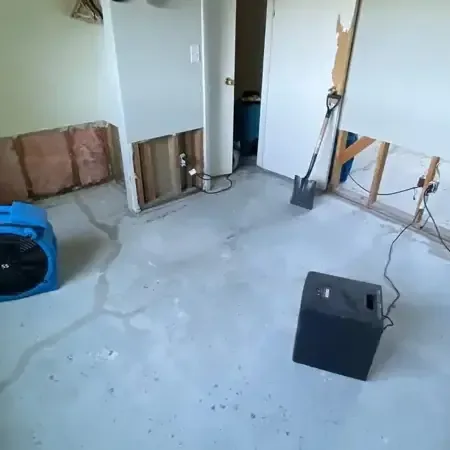
Water heater leak cleanup begins with removing standing water, then finding where it traveled. Moisture meters and thermal cameras show wet framing behind finished surfaces.
Water extraction uses pumps and wet vacuums, and then dehumidifiers and air movers take over the drying.
On a slab, the crew checks where water traveled beneath the flooring, since vinyl and laminate planks can trap water that never shows on the surface.
- Standing water is extracted from floors and low spots.
- Wet baseboards and low drywall are removed where readings call for it.
- Flooring is lifted if water sits under it.
- Wall and ceiling cavities are opened to dry.
- Readings are repeated until the materials read dry.
How floors and walls react to a tank leak
Materials near the tank take the first hit, and each one reacts differently. The cleanup plan depends on what is under and around the heater.
Townhome rows add a wrinkle. A closet tank can send water across a shared wall, so telling the neighbor and the association early keeps the loss from growing.
- Tile and sealed concrete tolerate water and are cleaned and dried.
- Vinyl and laminate can trap water underneath and are often lifted.
- Hardwood can cup or buckle and needs moisture readings before any decision.
- Carpet and pad hold water and are usually removed.
- Drywall draws water upward from the floor and is cut out where readings run high.
Attic tanks and the ceiling below
An attic leak is the one most likely to go unseen. The water soaks insulation, saturates the attic floor and only then shows as a stain on the ceiling.
Ceiling leak water damage work removes wet insulation, cuts out sagging drywall and dries the joist bay. Light fixtures under the stain should stay off until they have been checked.
Replacing the tank and preventing a repeat
A leaking tank is replaced rather than patched, and a plumber handles the swap. A drain pan with a drain pipe under the tank, plus a working relief valve, helps catch smaller leaks.
The drying time estimator gives a rough idea of how long drying may take for a given room size.
- Ask the plumber about a drain pan with a drain pipe.
- Flush sediment from the tank as part of routine care.
- Replace an older tank before it fails, not after.
- Keep stored items off the floor near the tank.
Questions
Can a leaking water heater be repaired?
A leak from the tank itself means the tank has failed and needs replacing. Leaks at a fitting or valve may be fixable by a plumber.
Is water from a water heater leak clean?
It starts as clean supply water. Left to sit in insulation or carpet, it can become contaminated, so wet porous materials are usually removed.
What if the tank is in the attic?
Attic leaks soak insulation and the ceiling below before they show. The ceiling is opened and the joist bay dried, and the plumber replaces the tank.
How soon should drying start?
As soon as the water is off. Damp framing left closed up can grow mold within a day or two.
Does a garage floor need drying after a leak?
Concrete holds less water than wood, but the base of the walls, stored boxes and any flooring over the slab still need checking and drying.
Should the tank be replaced before the cleanup starts?
No. The cleanup and the replacement are separate jobs and can run side by side once the water is off. Delaying extraction lets the water soak deeper into floors and walls.