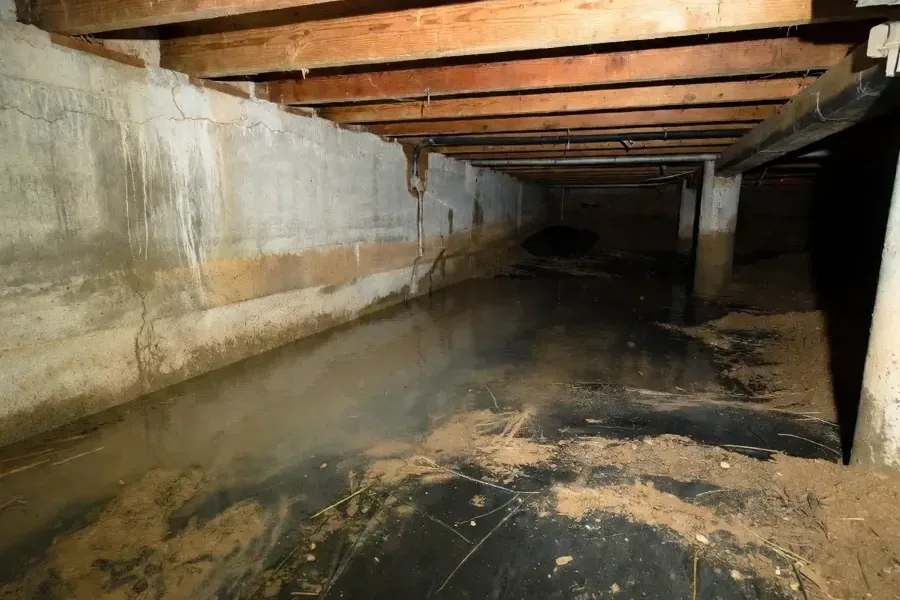
A hard rain can leave water under a house long after the sky clears. The red clay under Morrisville yards drains slowly, so water lingers against foundation walls and finds its way into vented crawl spaces. The first day is about telling a puddle from plain humidity and getting the water out before it soaks the framing above.
Key takeaways
- Water sitting on a crawl space vapor barrier is a leak to deal with, not a puddle to wait out.
- Red clay drains slowly, so groundwater can press against foundation walls and seep under floors for days after the rain stops.
- Wet insulation holds water against the subfloor and usually has to come out instead of drying in place.
- Standing water shows as a sheen, ripples or wet piers, while damp air shows as a musty smell and beads of moisture on ductwork.
- Pumping out the water is only step one: joists and subfloor are dried with dehumidifiers until the wood reads dry.
Standing water or damp air under the floor?
Most crawl spaces hold some humidity, so a damp smell alone does not mean flooding. What counts is water that can be seen.
A flashlight at the access hatch usually settles it. The beam shows the vapor barrier, the piers and the soil along the foundation walls.
The signs below help sort one situation from another before anyone decides how urgent it is.
- Standing water: a shine on the barrier, ripples when the ground shakes, or tide marks on the piers.
- Wet soil without a puddle: dark, soft ground under a barrier that looks intact and has no sheen.
- Damp air only: a musty smell, beads of moisture on cold ducts and no water on the ground.
- A running plumbing leak: water that keeps coming in after the rain has stopped, often near a pipe or a drain.
Why red clay holds rain in Morrisville yards
Red clay packs tight, and water moves through it slowly. After a downpour the yard stays saturated while the rain keeps pushing toward the lowest spot, which is often the crawl space.
Raleigh-Durham International Airport averages 46.07 inches of precipitation a year, with summer thunderstorms and heavy tropical rain in late summer and fall. Hurricane Fran in 1996 showed how much water the Triangle can take in during a single storm.
Many single-family homes in town sit on vented crawl spaces, and those vents let humid air and splashed rain inside.
- Gutters and downspouts that empty right beside the foundation.
- Low spots in the yard that slope toward the house.
- Vents and access doors at ground level that take in runoff.
- A sump pump that fails, loses power or cannot keep up.
The first steps when water is under the floor
Start by working out whether water is still coming in. A plumbing leak can be stopped at the home's main shutoff, while rain water stops only when the rain does.
Then protect people and equipment before anything under the house is touched.
Stay out of the wet space
Crawl spaces mix water with wiring, ducts and sometimes a furnace or a water heater. Entering one while it is flooded can be dangerous for anyone who is not trained for it.
- Switch off power to the area at the breaker if the panel is dry and easy to reach.
- Keep extension cords away from the water.
- Keep children and pets away from the hatch.
Stop the source and document the damage
Photos from the hatch, with the date, give the insurer and the crew a starting point. If a pipe is leaking, closing the home's main shutoff stops it.
- Photograph the barrier, the piers, the insulation and any pooled water.
- Write down when the rain began and when water first showed up.
- List stored items or equipment under the house.
Decide who to call
A plumber handles a failed pipe, and a drainage or grading contractor handles runoff. The wet framing and insulation are the job of crawl space water removal, and it helps to have that crew working while the other trades are scheduled.
What the extraction crew removes first
Pumps and a wet vacuum clear the standing water first, since the longer it stays, the more the wood absorbs.
Insulation between the joists is the next job. Wet batts sag, hold water against the subfloor and rarely dry in place, so they are pulled out and bagged.
Water extraction under a house is mostly that sequence: water out, wet material out, then drying.
- Pump out pooled water and clear low spots in the soil.
- Pull wet insulation and any sagging sections of vapor barrier.
- Wipe down or dry the barrier so it can go back in place.
- Check ducts, wiring and plumbing for water damage and report problems found.
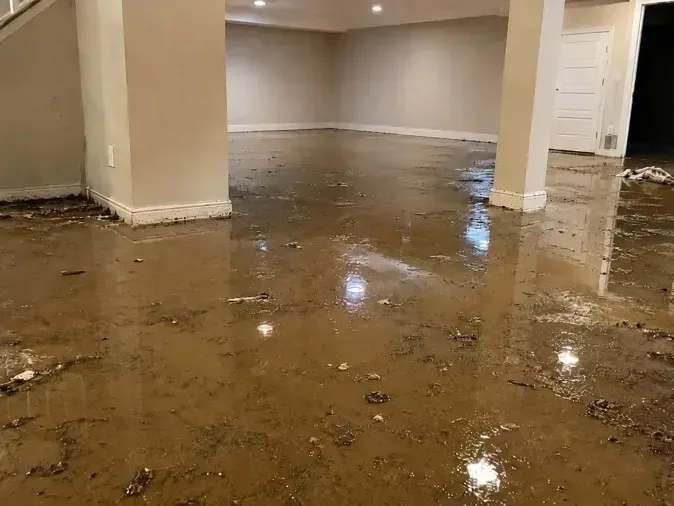
Drying joists and subfloor
After the water is gone, the wood still holds moisture. A moisture meter on the joists and the subfloor shows how wet they really are.
Dehumidifiers and air movers are set up so air moves across the wood while humid air is pulled out. Structural drying in a humid climate leans on dehumidifiers more than on fans, because open vents can bring in more moist air.
The crawl space moisture check gives a rough read on whether humidity under the house is a problem. Mold is one reason to dry quickly, since damp wood left alone can start growing it within a day or two.
- Joists and subfloor are checked with a meter at set points.
- Equipment stays until the wood reads like dry wood elsewhere in the house.
- Insulation goes back only after the framing is dry.
Keeping rain from coming back under the house
Fixes outside the house matter as much as the cleanup inside it. A little grading and a longer downspout can change what the next storm does.
Checking under the house after each hard rain for the first few seasons catches a problem while it is still small.
- Extend downspouts so they empty well away from the foundation.
- Regrade low spots so the ground slopes away from the walls.
- Keep the barrier sealed to the walls and piers after the repair.
- Test the sump pump before storm season and think about a battery backup.
Questions
Is water in a crawl space an emergency?
It is when water stands on the barrier or soaks the insulation. The longer the wood stays wet, the more it absorbs, and wet framing is slower and costlier to dry. A few damp spots on soil with no sheen are less urgent but still worth a look.
Can wet crawl space insulation be saved?
Usually not. Batts that have soaked up water sag, press moisture into the subfloor and rarely dry in place, so they are removed and new insulation goes in after the wood is dry.
How can a homeowner tell rain water from a plumbing leak?
Rain water appears during or after storms and slows as the ground drains. A plumbing leak keeps flowing in dry weather and often shows near a pipe, a drain or a water heater.
Does Morrisville clay make crawl space water more likely?
It can. Red clay drains slowly, so water has fewer places to go than in sandy soil. Gutters, grading and a working sump pump decide how much of it reaches the house.
Does a crawl space still need drying after the water is pumped out?
Yes. Pumping removes the puddles, but the joists, subfloor and soil still hold moisture. Readings from a meter show when the wood is dry enough to close up.