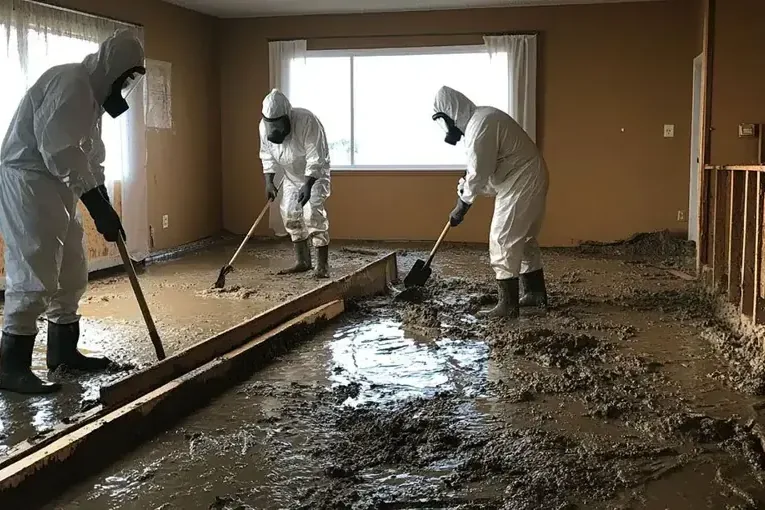
Sewage coming up through a toilet, tub or floor drain is one of the most disruptive losses a household can face. In Holly Springs the first question is where the backup starts, because Town sewer pipes and septic systems are handled by different offices. The cleanup itself is the same hands-on Category 3 work either way.
Key takeaways
- Broken Town water or wastewater pipes and wastewater spills or blockages go to the Town Utilities and Infrastructure office.
- Septic and other onsite wastewater complaints go to Wake County Onsite Water Protection.
- Several drains backing up at once points toward the main drain or the Town pipe, while a single fixture points to a local clog.
- Sewage is Category 3 water, so porous materials it touched are removed, not dried and kept.
- Stop using water in the house until the cause is known.
Two systems, two places to report
The Town of Holly Springs treats wastewater from homes and businesses at the Utley Creek Water Reclamation Facility. Holly Springs Utilities and Infrastructure maintains the Town's water, wastewater and stormwater drainage systems.
Septic systems follow a different path. Complaints and repair requests for septic and other onsite wastewater go to Wake County Onsite Water Protection.
- Broken or damaged Town water or wastewater pipes: Utilities and Infrastructure, which is monitored during and after business hours.
- Wastewater spills and blockages in Town pipes: the same office.
- Septic and onsite wastewater complaints and repairs: Wake County Onsite Water Protection.
- Questions about Town services, including utility bills: Holly Springs 311.
How to tell where a backup starts
Where the sewage appears gives clues. The lowest drain in the house is usually the first to show a problem in the main drain.
None of this replaces a plumber's camera, but it helps decide who to call first.
- Several fixtures gurgling or backing up together suggests the main drain or the Town pipe.
- One toilet or one tub backing up usually means a clog in that branch.
- A floor drain in the garage or basement bubbling during heavy use points to the main drain.
- Neighbors reporting the same problem suggests something larger than one house.
What to do right away
Water running into a blocked drain only adds to the overflow. Stopping it limits how much spreads.
Protect people and the house
Sewage water carries bacteria, so contact should be limited. Children, pets and anyone with a weak immune system should stay out of the affected rooms.
- Stop using sinks, tubs, showers, washers and dishwashers.
- Do not flush toilets until the cause is clear.
- Skip chemical drain cleaners, which can splash back and harm skin.
Document and call
Photos of the affected rooms and the drain help the plumber, the Town and the insurer. If the problem seems to be in the Town pipe, a report to the Town utilities office starts that side of the repair.
A sewage backup cleanup crew can begin on the house side while the source is being fixed. The same Category 3 steps apply to sewage backup cleanup across the area.
Warning signs before a backup
Backups rarely come without a hint. Slow drains, gurgling sounds and odors near a floor drain often show up days before sewage appears.
Grease, wipes, paper towels and tree roots are the usual causes of a blockage in a home's own drain. A blockage in a Town pipe is a different matter and is reported to the Town.
- Slow tubs and sinks in more than one room.
- Gurgling from a drain when a toilet is flushed or the washer drains.
- Sewer odor near a floor drain, a cleanout or a basement-style utility area.
- Wet spots in the yard along the path of the sewer pipe.
Why sewage is Category 3 work
Water from a sewer or septic backup is grossly contaminated. Anything porous that absorbs it holds contamination that cleaning cannot fully remove.
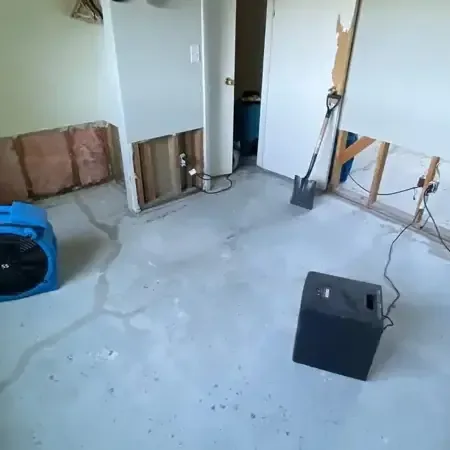
That is why carpet, pad and low drywall come out instead of drying in place. The aim is to remove the contaminated material and treat what stays.
- Carpet and pad are removed and discarded.
- Drywall and baseboards touched by the water are cut out above the wet mark.
- Insulation in affected wall cavities is removed.
- Hard floors, tile and concrete are cleaned and treated.
What the cleanup crew does inside the house
The crew wears protective gear and sets up so contamination does not travel to clean rooms. Water extraction comes first, using pumps and wet vacuums to remove standing sewage.
After the removal, surfaces are cleaned and treated, and the structure is dried so it can be rebuilt.
- Containment of the work area to protect the rest of the home.
- Extraction of liquid, then removal of porous materials.
- Cleaning and treatment of floors, wall bases and cabinet kicks.
- Drying with dehumidifiers and air movers, with readings to confirm.
A fast-growing town and its mix of systems
The Town built its first sewage plant in 1987, and rapid growth followed. Holly Springs grew from about 900 people in 1992 to nearly 25,000 in 2010 and counted 41,239 residents at the 2020 Census.
That growth means many households connect to Town sewer, though some properties still rely on septic. Knowing which one a home uses is the first step in reaching the right office when a backup happens.
After the cleanup: rebuilding, records and preventing a repeat
Once the contaminated materials are gone and the structure is dry, rebuilding can start with new pad and carpet, drywall, baseboards and paint. Photos, the plumber's findings and any report number from the Town or the county help with an insurance claim.
A backup that began in the home's own drain can come back if the cause is not fixed. A plumber's camera inspection shows roots, a sagging section or a break, and the finding tells the household whether the problem is on the house side or in the Town pipe.
Local water damage restoration pages explain the other services that follow a loss like this.
- Ask the plumber for a written finding on where the blockage sat.
- Keep photos, invoices and any report number from the Town or the county.
- Keep grease, wipes and paper towels out of the drains.
- Schedule the rebuild only after readings confirm the structure is dry.
Questions
Who gets the report when Town sewer pipes back up?
Broken or damaged Town water or wastewater pipes, and wastewater spills and blockages, are reported to Holly Springs Utilities and Infrastructure. That number is monitored during and after business hours.
Who handles a septic system problem?
Septic and other onsite wastewater complaints and repair requests go to Wake County Onsite Water Protection, not to the Town.
Can sewage-soaked carpet be cleaned and kept?
In nearly every case no. Sewage soaks into carpet fibers and pad, and removal is the standard practice for Category 3 water.
Should the restoration crew wait for the plumber or the Town?
Not necessarily. Once the backup has stopped or the source is isolated, extraction and removal can begin while the repair on the pipe is arranged.
How is the area dried after the removal?
Dehumidifiers and air movers run while moisture readings are taken on framing and subfloor. Drying is complete when the readings match dry materials.