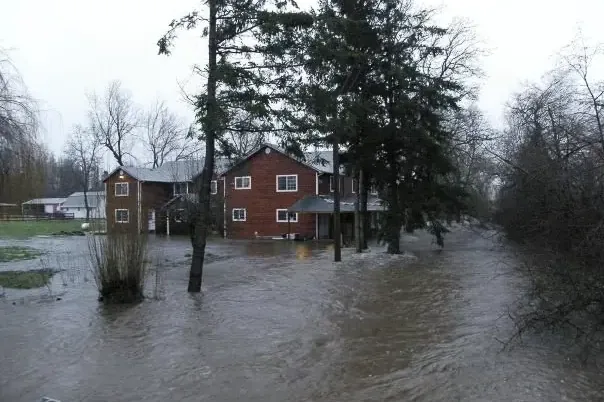
From Sunday evening, July 6, into Monday morning, July 7, 2025, the remnants of Tropical Storm Chantal caused flash flooding in Carrboro. Rain totaled 5 to 9 inches across Orange County, and the Town named Canterbury Townhomes and Weatherhill Pointe as severely impacted. For a household with creek water indoors, the first steps are much the same in a townhome or a house.
Key takeaways
- Creek water that enters a home is Category 3, so porous materials near the floor are usually removed.
- After Chantal, residents were told to avoid contact with surface water, including creeks and streams, while sewer breaks were repaired.
- Town Planning, Zoning, and Inspections staff worked with Fire personnel on damage assessments, so photos and a clear record of the damage matter.
- Water that comes up through floorboards soaks the subfloor, not just the surface flooring.
- Attached townhomes need drying planned wall by wall, since neighbors share structure.
What the Chantal flooding did in Carrboro
Flooding built through Sunday evening and carried into Monday morning. A State of Emergency was declared for Orange County, with a Flash Flood Warning and numerous water rescues in low-lying areas.
News coverage names Toms Creek and Morgan Creek as the flooding source for one hard-hit neighborhood. Weatherhill Pointe sits just downstream of University Lake, and one homeowner there watched floodwater bubble up through the floorboards.
The Carrboro Public Works Facility was devastated as well, a sign of how fast the water moved.
Flood zones, creeks and checking an address
Coverage of the neighborhood damage describes an area with several FEMA flood zone designations, including a floodway, and it points to Toms Creek and Morgan Creek as the water source. The town also has Bolin Creek and Dry Gulch, and a 2012 Town report on the Dry Gulch stream restoration lists sediment, stormwater runoff, road crossings and loss of streamside vegetation among the causes of degradation.
The Town keeps a Flood Resilience page covering floodplain administration, FEMA information, urban flooding and FAQs. North Carolina's flood.nc.gov adds a check of flood risk for one address.
- Look up the address on flood.nc.gov before and after a loss.
- Read the Town's Flood Resilience page for floodplain and FEMA information.
- Report new flooding through the Stormwater Hotline or the online flood report form.
Keeping clear of contaminated water
While sewer breaks were being repaired after the storm, residents were told to avoid contact with surface water, including creeks and streams. The same caution fits water inside a flooded home, since it may have come from those creeks.
Chapel Hill and Carrboro were not under a boil water advisory after the storm, so the tap was not the issue. The concern was what the flood left behind.
- Wear waterproof boots, gloves and a mask in wet rooms.
- Wash hands and any skin that touched floodwater.
- Keep children and pets out of the affected rooms.
- Leave the heating and cooling system off if the unit or ducts took in water.
The first steps inside a flooded home
The order of work protects both safety and the paper trail. Each step below sets up the next one.
Photograph and report
Wide and close photos of each room, with the high-water mark on the walls, come first. Carrboro runs a Stormwater Hotline, an online stormwater service request form and an online flood report form, and emergencies go to 911.
- Note which rooms flooded and how deep the water stood.
- Photograph damaged belongings before they are moved or thrown out.
- Keep receipts for hotel stays, rented equipment and cleanup supplies.
Power and fuel
Water and electricity do not mix. Power to a flooded area stays off until a qualified person has checked the wiring and the panel.
Get the water out
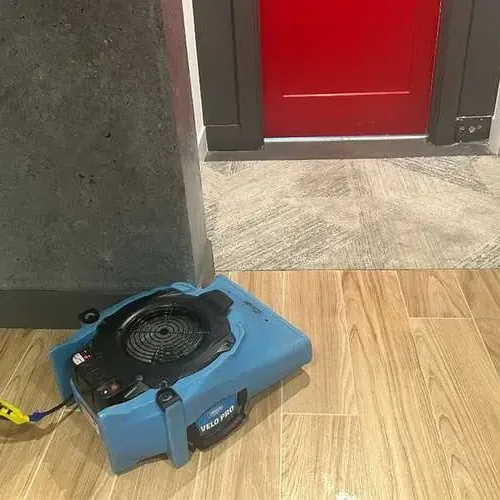
Flood water cleanup starts with pumps and wet vacuums that clear standing water. Water extraction is worked from the lowest point so water does not drain back across the floor.
When water rises through the floor
Water that comes up from below soaks the subfloor, the underlayment and the bottom of the walls before much of it shows on the surface.
Hardwood and laminate can cup or buckle, and the subfloor underneath may need readings before anyone decides what to replace.
- Flooring is lifted in sections so the subfloor can dry.
- Baseboards come off so air can reach the bottom of the wall.
- Wall cavities are opened where readings show water above the floor.
- Cabinet kicks and toe spaces are checked, since water collects there.
Sorting belongings and important papers
Creek water reached floors, lower cabinets and anything stored low. Sorting comes after the photos and uses three piles: keep, clean and discard.
Items that carry personal or legal weight go first, since paper and electronics suffer the most from a wet room.
- Take passports, medicine, jewelry and papers out first if they were stored low.
- Leave electronics and appliances that stood in water unplugged until they are checked.
- Set fabrics aside for professional cleaning where that is possible.
- List what was lost, with photos, for the insurer or aid program.
Mucking and gutting a flooded home
Voluntary Agencies Active in Disaster were lined up to help residents with mucking and gutting flooded homes after Chantal. The terms describe the heavy first stage: shoveling mud and taking out wet materials.
Gutting means cutting out what cannot be cleaned, which after creek water is usually the bottom of the drywall, the insulation and the flooring.
- Mud and debris are shoveled out and bagged.
- Carpet and pad are cut into strips and removed.
- Drywall is cut above the high-water mark, with extra height for safety.
- Contents that soaked up water are sorted into keep, clean and discard.
Drying an attached townhome
Townhomes put two or more households inside one structure, so wet walls can run into the next unit. Structural drying is planned around shared walls, floors and stairs.
The area has a humid subtropical climate, with an average July high of 89 F and the heaviest rain in summer, so the air is already wet. Dehumidifiers matter as much as fans.
Mold is the reason to keep moving. Damp drywall and framing left shut up can start growing it quickly.
Questions
Is creek water inside a home Category 3?
Yes. Creek water carries soil, runoff and sometimes sewage, which is why porous materials that touched it are normally removed instead of cleaned.
Did the Town help assess flooded homes after Chantal?
The Town set up damage assessments through Planning, Zoning, and Inspections staff working with Fire personnel. Reporting the damage creates a record that helps later.
How can a household check flood risk?
North Carolina's flood.nc.gov lets residents check flood risk at a specific address. The Town also has a Flood Resilience page covering floodplain administration and FEMA information.
Why would water come up through the floor?
When creeks rise, the ground around a home can fill with water and push it up through gaps in the floor. The subfloor then needs drying even when the surface looks fine.